Ever wondered why some companies grow like wildfire while others barely survive? The secret often lies in their B2B game. In this deep dive, we’ll unpack everything you need to know about B2B—strategies, trends, tools, and real-world insights that actually work.





What Exactly Is B2B and Why It Dominates Global Commerce

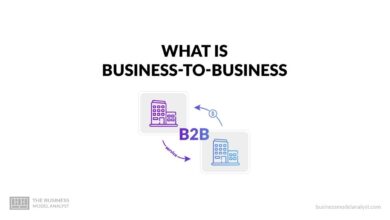
Business-to-business (B2B) refers to transactions between companies, such as a manufacturer selling to a wholesaler or a software provider offering services to another enterprise. Unlike B2C (business-to-consumer), B2B relationships are built on long-term contracts, complex decision-making, and high-value deals.
The Core Definition of B2B
At its heart, B2B involves one business providing products or services to another. This could be raw materials, SaaS platforms, logistics, consulting, or even office supplies. The key differentiator from B2C is the buyer’s intent: businesses buy to operate, scale, or resell—not for personal use.
- Transactions are typically larger in volume and value.
- Decision-making involves multiple stakeholders.
- Sales cycles are longer but yield higher customer lifetime value.
“B2B isn’t just about selling; it’s about solving business problems at scale.” — Forbes
How B2B Differs from B2C
While both models aim to generate revenue, their approaches diverge significantly. B2C focuses on emotional appeal, impulse buys, and mass marketing. B2B, on the other hand, thrives on logic, ROI justification, and relationship-building.
- B2C targets individuals; B2B targets departments, procurement teams, or C-suite executives.
- B2C uses platforms like Instagram and TikTok; B2B leans on LinkedIn, email nurturing, and webinars.
- B2C metrics focus on conversion rates; B2B tracks lead quality, pipeline velocity, and contract value.
Understanding these distinctions is crucial for crafting effective strategies. For deeper insights, check out Investopedia’s guide on B2B.
The Evolution of B2B: From Fax Machines to AI-Driven Platforms
B2B hasn’t always been digital. Its evolution mirrors technological progress, shifting from manual processes to data-driven ecosystems. Today’s B2B landscape is faster, smarter, and more customer-centric than ever before.
Historical Milestones in B2B Commerce
The roots of modern B2B trace back to the industrial revolution when manufacturers needed reliable suppliers. Fast forward to the 1980s: EDI (Electronic Data Interchange) allowed companies to exchange documents electronically, reducing errors and delays.
- 1990s: Rise of e-commerce platforms like Alibaba and ThomasNet.
- 2000s: CRM systems (e.g., Salesforce) transformed sales workflows.
- 2010s: Cloud computing enabled scalable SaaS solutions for B2B vendors.
Modern Digital Transformation in B2B
Today, digital transformation isn’t optional—it’s essential. Companies leverage AI, automation, and analytics to streamline operations and enhance customer experiences. According to McKinsey, over 70% of B2B buyers expect a fully digital purchasing journey.
- Self-service portals allow clients to place orders without human intervention.
- Chatbots handle initial inquiries, freeing up sales reps for high-value tasks.
- Predictive analytics forecast demand and optimize inventory.
B2B Marketing: Strategies That Actually Drive Results
Marketing in the B2B world isn’t about flashy ads or viral trends. It’s about building trust, demonstrating expertise, and guiding prospects through a complex buying journey. Let’s explore proven strategies that deliver measurable outcomes.
Content Marketing for B2B Audiences
High-quality content positions your brand as a thought leader. Whitepapers, case studies, and industry reports are especially effective because they address real business challenges.
- Create gated content to capture leads (e.g., download a report in exchange for an email).
- Use SEO to rank for niche keywords like “best CRM for mid-sized businesses”.
- Repurpose content into webinars, infographics, or LinkedIn articles.
HubSpot’s B2B content marketing guide offers actionable templates and frameworks.
Account-Based Marketing (ABM)
ABM flips traditional marketing by targeting specific high-value accounts rather than broad audiences. Instead of casting a wide net, you tailor messaging to individual companies.
- Identify target accounts using firmographic data (industry, size, revenue).
- Personalize outreach with custom landing pages and dedicated campaigns.
- Align sales and marketing teams to engage key decision-makers.
“ABM can generate 200% higher ROI than other marketing initiatives.” — ITSMA
LinkedIn and Social Selling in B2B
LinkedIn is the #1 platform for B2B professionals. With over 900 million users, it’s where executives research vendors, read recommendations, and connect with peers.
- Optimize your company page with clear value propositions.
- Encourage employees to share insights and engage with prospects.
- Use LinkedIn Sales Navigator to find and message decision-makers.
For best practices, see LinkedIn’s official B2B selling trends report.
B2B Sales Funnel: Mapping the Buyer’s Journey
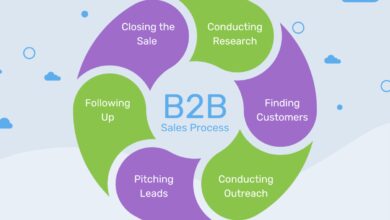
The B2B sales funnel is longer and more intricate than its B2C counterpart. Prospects go through stages of awareness, consideration, and decision—each requiring tailored messaging and support.
Top of Funnel (TOFU): Generating Awareness
This stage is about attracting potential buyers who may not yet know they have a problem. Educational content works best here.
- Blog posts explaining industry pain points.
- Free tools like ROI calculators or audit checklists.
- Paid ads targeting job titles (e.g., “CFOs looking to reduce overhead”).
Middle of Funnel (MOFU): Nurturing Consideration
Now prospects recognize their challenge and are evaluating solutions. Your goal is to position your offering as the best fit.
- Email drip campaigns with case studies and product comparisons.
- Live demos or free trials to showcase functionality.
- Webinars featuring customer success stories.
Bottom of Funnel (BOFU): Closing the Deal
At this stage, the buyer is ready to purchase but may need final reassurance. Provide social proof, pricing clarity, and negotiation support.
- Customized proposals with implementation timelines.
- References from existing clients in the same industry.
- Flexible payment terms or pilot programs.
B2B E-Commerce: The Digital Marketplace Revolution
Gone are the days of paper catalogs and phone orders. B2B e-commerce is booming, with global sales projected to reach $20.9 trillion by 2027 (Source: eMarketer).
Why B2B Buyers Prefer Online Purchasing
Convenience, speed, and transparency drive the shift to digital. Buyers want the same seamless experience they get in B2C—24/7 access, real-time inventory, and instant quotes.
- 80% of B2B buyers say they’d prefer to buy online rather than through a sales rep.
- Online platforms reduce procurement time by up to 50%.
- Self-service options empower buyers to make decisions independently.
Key Features of a Successful B2B E-Commerce Platform
Not all e-commerce sites are created equal. B2B platforms must handle complex requirements like bulk pricing, contract management, and multi-user accounts.
- Dynamic pricing based on volume or customer tier.
- Integration with ERP and CRM systems for seamless order processing.
- Custom catalogs for different client segments.
Shopify Plus and BigCommerce Enterprise are leading platforms enabling B2B functionality. Learn more at BigCommerce’s B2B platform comparison.
B2B Customer Relationship Management (CRM) Systems
A robust CRM is the backbone of any successful B2B operation. It centralizes customer data, tracks interactions, and automates workflows to improve efficiency and retention.
Top CRM Solutions for B2B Companies
Choosing the right CRM depends on your industry, team size, and integration needs.
- Salesforce: Industry leader with advanced AI (Einstein Analytics) and extensive app ecosystem.
- HubSpot CRM: User-friendly interface with powerful free tier and marketing automation.
- Microsoft Dynamics 365: Ideal for enterprises already using Microsoft 365.
How CRM Enhances B2B Sales Efficiency
CRMs eliminate silos between departments and provide a single source of truth for customer interactions.
- Automate follow-ups and task reminders.
- Track deal stages and forecast revenue accurately.
- Segment customers for targeted campaigns.
“Companies using CRM see a 36% increase in customer satisfaction and 34% higher sales productivity.” — Nucleus Research
B2B Analytics and Data-Driven Decision Making
In the age of information, gut feelings don’t cut it. B2B success hinges on data—understanding customer behavior, measuring campaign performance, and predicting market shifts.
Essential B2B Metrics to Track
Not all metrics matter equally. Focus on KPIs that reflect business health and growth potential.
- Customer Acquisition Cost (CAC): How much it costs to win a new client.
- Customer Lifetime Value (CLTV): Total revenue expected from a client over time.
- Churn Rate: Percentage of customers who stop doing business with you.
- Lead-to-Customer Conversion Rate: Efficiency of your sales funnel.
Tools for B2B Data Analysis
Leverage technology to turn raw data into actionable insights.
- Google Analytics 4: Track website behavior and campaign performance.
- Tableau: Visualize complex datasets for executive reporting.
- Looker Studio: Create dashboards that integrate CRM, ad, and sales data.
For advanced analytics, explore Gartner’s guide on B2B data enrichment.
B2B Trends Shaping the Future of Business Commerce
The B2B landscape is evolving rapidly. Staying ahead means embracing innovation and anticipating shifts before they become mainstream.
Rise of AI and Automation in B2B
Artificial intelligence is no longer sci-fi—it’s a daily tool in B2B operations.
- AI-powered chatbots handle 60% of customer service queries without human input.
- Predictive lead scoring identifies high-intent prospects.
- Automated proposal generators save hours of manual work.
Sustainability and Ethical Sourcing in B2B
More companies are demanding environmentally responsible supply chains. Sustainability isn’t just PR—it’s a competitive advantage.
- 73% of B2B buyers say they’ll pay more for sustainable products (Source: IBM IBV).
- Certifications like ISO 14001 boost credibility.
- Transparency in sourcing builds long-term trust.
Hybrid Buying Models: The New Normal
Post-pandemic, B2B buyers blend digital and human interactions. They research online, request demos via video, and close deals remotely—but still value personal relationships.
- Offer hybrid onboarding: digital training + live Q&A sessions.
- Use video messaging for personalized outreach.
- Maintain a human touch even in automated workflows.
What is B2B and how does it work?
B2B, or business-to-business, refers to commerce between companies rather than between a company and individual consumers. It works through structured sales processes, often involving contracts, negotiations, and long-term relationships. Examples include software providers selling to enterprises or manufacturers supplying parts to other producers.
What are the best B2B marketing strategies?
The most effective B2B marketing strategies include content marketing, account-based marketing (ABM), LinkedIn outreach, SEO, and email nurturing. Success depends on understanding your audience’s pain points and delivering value at every stage of the buyer’s journey.
How is B2B e-commerce different from B2C?
B2B e-commerce typically involves larger order values, recurring purchases, negotiated pricing, and multi-user accounts. Unlike B2C, which emphasizes speed and convenience, B2B prioritizes customization, integration, and long-term contracts.
What CRM is best for B2B sales?
Salesforce, HubSpot CRM, and Microsoft Dynamics 365 are top choices for B2B companies. The best CRM depends on your business size, industry, and integration requirements. Look for features like pipeline management, automation, and analytics.
What are the biggest B2B trends in 2024?
Key B2B trends in 2024 include AI-driven personalization, sustainable sourcing, hybrid sales models, self-service portals, and predictive analytics. Companies embracing these trends gain a competitive edge in customer experience and operational efficiency.
B2B isn’t just a transaction model—it’s a strategic ecosystem driving global economies. From understanding its fundamentals to leveraging cutting-edge tools and trends, mastering B2B requires a blend of insight, technology, and relationship-building. Whether you’re refining your marketing funnel, adopting a new CRM, or exploring AI, the principles remain the same: solve real problems, deliver measurable value, and stay ahead of the curve. The future of B2B belongs to those who innovate with purpose.
Further Reading: